The Sveriges Riksbank Prize in Economic Sciences in Memory of Alfred Nobel 2019: for their experimental approach to alleviating global poverty


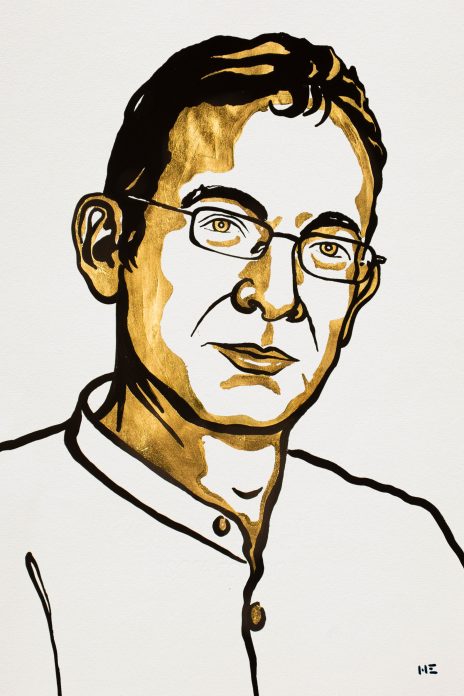
Ill. Niklas Elmehed. © Nobel Media.
Abhijit Banerjee
Prize share: 1/3
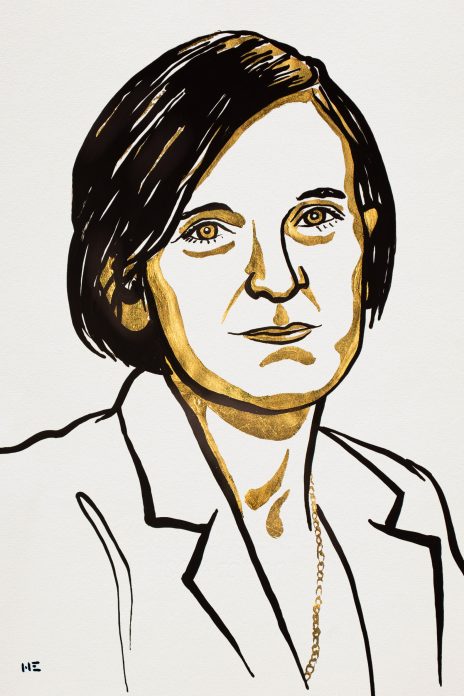
Ill. Niklas Elmehed. © Nobel Media.
Esther Duflo
Prize share: 1/3
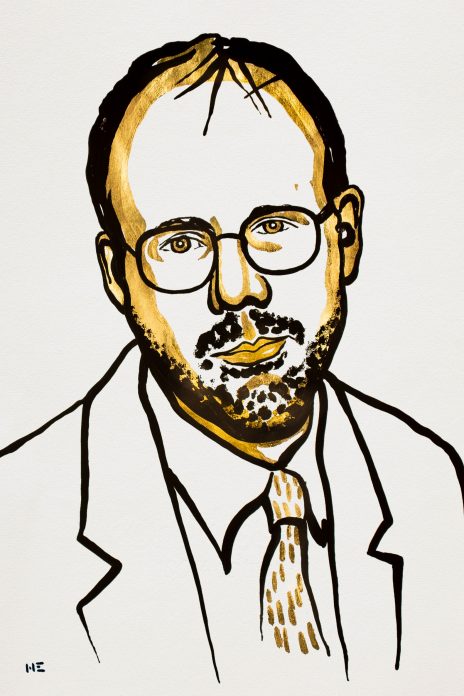
Ill. Niklas Elmehed. © Nobel Media.
Michael Kremer
Prize share: 1/3
The Sveriges Riksbank Prize in Economic Sciences in Memory of Alfred Nobel 2019 was awarded jointly to Abhijit Banerjee, Esther Duflo and Michael Kremer "for their experimental approach to alleviating global poverty."
Prize announcement
Announcement of the 2019 Prize in Economic Sciences by Professor Göran K. Hansson, Secretary General of the Royal Swedish Academy of Sciences, on 14 October 2019.
“This research could reduce global poverty”
Immediately after the announcement, Jakob Svensson, member of the Prize Committee for Economic Sciences, was interviewed by freelance journalist Fanny Härgestam regarding the 2019 Sveriges Riksbanks Prize in Economic Sciences in Memory of Alfred Nobel.
Their research is helping us fight poverty
The research conducted by this year’s Laureates has considerably improved our ability to fight global poverty. In just two decades, their new experiment-based approach has transformed development economics, which is now a flourishing field of research.
Despite recent dramatic improvements, one of humanity’s most urgent issues is the reduction of global poverty, in all its forms. More than 700 million people still subsist on extremely low incomes. Every year, around five million children under the age of five still die of diseases that could often have been prevented or cured with inexpensive treatments. Half of the world’s children still leave school without basic literacy and numeracy skills.
This year’s Laureates have introduced a new approach to obtaining reliable answers about the best ways to fight global poverty. In brief, it involves dividing this issue into smaller, more manageable, questions – for example, the most effective interventions for improving educational outcomes or child health. They have shown that these smaller, more precise, questions are often best answered via carefully designed experiments among the people who are most affected.
In the mid-1990s, Michael Kremer and his colleagues demonstrated how powerful this approach can be, using field experiments to test a range of interventions that could improve school results in western Kenya.
Abhijit Banerjee and Esther Duflo, often with Michael Kremer, soon performed similar studies of other issues and in other countries. Their experimental research methods now entirely dominate development economics.
The Laureates’ research findings – and those of the researchers following in their footsteps – have dramatically improved our ability to fight poverty in practice. As a direct result of one of their studies, more than five million Indian children have benefitted from effective programmes of remedial tutoring in schools. Another example is the heavy subsidies for preventive healthcare that have been introduced in many countries.
These are just two examples of how this new research has already helped to alleviate global poverty. It also has great potential to further improve the lives of the worst-off people around the world.
Illustrations
The illustrations are free to use for non-commercial purposes. Attribute ”© Johan Jarnestad/The Royal Swedish Academy of Sciences”
Illustration: Difference productivity (pdf)
Illustration: Improved educational outcomes (pdf)
Illustration: Vaccination rates (pdf)
Read more about this year’s prize
Popular science background: Research to help the world’s poor
Pdf 335 kBScientific Background: Understanding development and poverty alleviation
Pdf 567 kB
Abhijit Banerjee, born 1961 in Mumbai, India. Ph.D. 1988 from Harvard University, Cambridge, USA. Ford Foundation International Professor of Economics at Massachusetts Institute of Technology, Cambridge, USA.
Esther Duflo, born 1972 in Paris, France. Ph.D. 1999 from Massachusetts Institute of Technology, Cambridge, USA. Abdul Latif Jameel Professor of Poverty Alleviation and Development Economics at Massachusetts Institute of Technology, Cambridge, USA.
Michael Kremer, born 1964. Ph.D. 1992 from Harvard University, Cambridge, USA. Gates Professor of Developing Societies at Harvard University, Cambridge, USA.
The Prize amount: 9 million Swedish krona, to be shared equally between the Laureates
Further information: http://www.kva.se and http://www.nobelprize.org
Press contact: Eva Nevelius, Press Secretary, +46 8 673 95 44, +46 70 878 67 63, eva.nevelius@kva.se
Experts: Jakob Svensson, +46 70 177 67 17, jakob.svensson@iies.su.se, Torsten Persson, +46 79 313 39 04, torsten.persson@iies.su.se, members of the Committee for the Prize in Economic Sciences in memory of Alfred Nobel
The Royal Swedish Academy of Sciences, founded in 1739, is an independent organisation whose overall objective is to promote the sciences and strengthen their influence in society. The Academy takes special responsibility for the natural sciences and mathematics, but endeavours to promote the exchange of ideas between various disciplines.